Showing posts with label Best Picture Winners. Show all posts

Thursday, March 26, 2020

Review - Cavalcade

March 26, 2020

Cavalcade – UK, 1933

Unless you’re the director, producer, writer, or star of the winner of the Oscar for Best Picture of the Year, the winner matters little in the long run. The most we can hope for is that the victor is a high-quality film that both speaks to the moment and ultimately stands the test of time. At the very least, we hope the winner doesn’t leave us with the notion that the Academy lost their collective mind. At the sixth Academy Awards in 1933, the members of the Academy had to choose between ten films: Cavalcade, A Farewell to Arms, 42nd Street, I Am a Fugitive of a Chain Gang, Lady for a Day, Little Women, The Private Life of Henry VIII, She Done Him Wrong, Smilin’ Thru, and State Fair. Not having seen most of these, I am not in a position to be able to say which one should have one; however, I’m fairly certain that the best of the nominees was not Frank Lloyd’s Cavalcade, that year’s eventual winner.

Cavalcade is the kind of film that, were it made today, would likely be called Oscar-bait; it’s also the kind of film that usually takes home awards primarily because many Oscar voters seem to appreciate effort over results. In other words, Cavalcade is an attempt at greatness. It is a film made by serious filmmakers and acted in a manner that makes one think that the cast were aware of the potential power of their words and thus delivered them as if they were on stage reciting Shakespeare, and by this, I mean turning to the camera and talking directly to the audience instead of the person they are actually conversing with. The film also has a scope befitting of a great film, and it touches on issues that few could reasonably argue are not worth contemplating for two hours. Alas, there are simply too many of them. The result of this is a pace that often feels rushed. Characters go off to war, only to return victorious ten minutes later. We learn that two characters have fallen in love, only for tragedy to remove them from the picture a few minutes later, and if you think that the film will take a moment to allow the other characters to reflect on their loss, you’d be sorely mistaken. Instead the film just jumps ahead in time to the next tragic period of time.

The film begins on New Year’s Eve in 1899. Our protagonists are a British husband and wife named Robert (Clive Brook) and Jane Marryot (Diana Wynyard) who are tremendously happy. We know because in their first scene, they tell us, which is more often than not an ominous sign. Sure enough, war is imminent. Robert, as well as the family butler, Alfred (Herbert Mundin), is about to be sent to South Africa to fight in the Second Boer War, a duty that neither one of them has any reservations about. Jane hopes the war is over before Robert gets there, but acknowledges that Robert would hate that, and Alfred explains to his wife that England occasionally has to have wars in order to demonstrate who the “top dog” is. Neither of them comes back with a different opinion, though their gung-ho nature has been slightly tempered.

The film’s conscience is Jane. A mother of two, she is horrified by the rapturous reactions that greet the commencement of armed conflict, and if you’re not clear where she stands, just wait. Eventually, she’ll do something to let you know like kicking her children’s toy tanks or wondering aloud just how many of Britain’s sons will come back alive. She is a pacifist in a time of Hawks, and unfortunately the war in South Africa ushers in a century of military clashes, death, technological change, and cultural loss.

Cavalcade has its share of nice moments. In one, Robert is asked by his sons if he killed any Boers, and his reply is a complete reversal of a remark he made prior to leaving for the battlefield. In another, a brass band plays on, and revelries continue despite a man lying dead from a tragic accident, and there’s a sweet moment in which the youngest son, Joey, sneaks backstage to see a childhood friend whose become a singer and accidentally sees her begin to undress. The way he looks away and then tries to exit the room undetected reveals an admirable level of decency and speaks of a more innocent time.

Unfortunately, such moments are undone by a pace that rarely allows the story to breathe. Leaps in time occur suddenly without any discussion of the changes that have taken place in the ensuing years. Some characters are introduced and then discarded; others reappear at an older age, yet the film devotes so little time to them that they don’t resonate. There’s also the film’s annoying habit of telegraphing disaster by having characters discuss how they would accept death because they could never imagine being as happy as they are at that moment. In one scene, a newlywed utters these sentiments before walking off screen, the camera remaining in place to linger on a lifebuoy with the word Titanic on it. Isn’t that convenient?

Soon it’s 1914; then 1918 in a chaotic and ineffective montage of marching troops and falling soldiers; then the Roaring 20's, during which we see a performance of Noel Coward’s “20th Century Blues,” a song that seems appropriate for the film but inappropriate for the venue in which it is sung; and finally New Year’s Eve, 1933, where we see Robert and Jane getting ready to crack open the champagne. The film has come full circle. However, its ending, with its somber reflection on the social impact of World War I and the subsequent cultural decline that occurred in the 1920’s, comes out of nowhere. This is a film that has been about a single family and the tragedies that befall it over the years. The children are generally respectful, and they grow into well adjusted adults. There is no sign of PTSD, and whenever one of them utters a remark that could be seen as slightly classist or egotistical, they quickly see the error of their ways and apologize. In other words, they are not affected by the changes that the film riles against in its final act. Thus, they are the wrong people to deliver a condemnation of 20th-century life. Actually, they’re proof that not everyone has changed.

Cavalcade is not the worst Best Picture winner. After all, stinkers such as Around the World in 80 Days, An American in Paris, and Midnight Cowboy are much less watchable. And Cavalcade does have some nice moments. Its opening scene, in which its characters celebrate a new year being ushered in with the commencement of a war, is well written and moving. I was also saddened by the fate of Alfred, the only character whom the war seems to have had a psychological impact on, and scenes detailing the aftermath of the First World War, some featuring blind soldiers learning to read Braille and weave baskets and others showing nearly empty churches, are quite effective at conveying the crises that gripped much of the world after the trauma of World War I.

However, too much of the film comes across as manipulative. Instead of letting the audience react to events naturally, characters look straight at the camera and tell viewers what they should be thinking. It’s annoying, and the fact that the makers of Cavalcade resorted to it says a lot about their confidence in the final product. Luckily for them, the Academy came to their rescue, ensuring Cavalcade a place in history, In doing so, however, they did serious damage to its credibility as an authority on quality. (on DVD and Blu-ray)

2 and a half stars

Thursday, May 23, 2013

Review - Chariots of Fire


May 23, 2013

Chariots of Fire – UK, 1981

My favorite part of Hugh Hudson’s 1981 Oscar-winning film Chariots of Fire in a scene that juxtaposes the stirring words of a religious sermon with the passion, struggle, and ultimately triumphs or agonies of Olympic athletes. The sermon is delivered by Eric Liddell, an Olympic athlete himself, and yet the images we see are not of him or the film’s other main character, Harold Abrahams. Instead, we see nameless athletes experiencing the euphoria of victory, the disappointment of second-place finishes, and the rush of emotions that often accompany losses. This is something that television audiences rarely see on Olympic broadcasts, which frequently focus on the three competitors fortunate enough to be on their way to a trophy presentation. The scene in Chariots of Fire reminds us that for every trio that gets an award, many more go home empty-handed despite being perhaps the best in their country and among the best in the world. In our results-oriented society, they are often neglected and forgotten, and this is a shame.

Chariots of Fire is the true story of two runners whose paths lead them to the 1924 Olympic Games. Liddell (Ian Charleson) is Scottish, Christian, and deeply religious; Abrahams (Ben Cross) is a veteran of World War I and Jewish. Both of them are constantly reminded that they are outsiders, yet when the time comes for them to race, they are expected to put country first. They met on the track in 1923, and on that day Liddell is victorious. Shocked and confused, Abrahams becomes determined to beat him the next time they face off. This is all handled rather unconventionally. There is no animosity between the two men, and if it weren’t for a lack of opportunity, it is easy to see the two of them becoming quite good friends. In fact, this is one of those rare films in which two fierce competitors square off and you don’t want either one of them to lose.

The film has a somewhat predictable arc for a film of this sort, and perhaps that is the reason the film could be made in the first place. There’s even a “Mickie”-type character named Sam Mussabini who shows up at just the right time claiming to be able to train someone to victory. This is followed by the requisite series of training montages, and in these scenes, Ian Holms’ delivery will likely remind some viewers of Burgess Meredith’s performance in Rocky. However, the film veers nicely away from the standard sports-film plot in its third act and reveals itself to be about something quite beautiful.

The film spreads itself a bit too wide at times. It wants to say something about athletes, politicians, religious bigotry, prejudice, romance, friendship, and rivalries, yet to do so adequately would require a much longer running time than just over two hours. Perhaps this is why the film’s peripheral characters, characters like Jennie Liddell, Lord Andrew Lindsay, and Henry Stallard, seem rather undeveloped. Even the relationship between Abrahams and his eventual wife Sybil Gordon feels rushed and incomplete. These characters, as well as members of the Royal family and officials from the British government, are often reduced to mere decorations. They either stand by as Abrahams recites one of his many monologues about his internal struggles, or they implore a reluctant Liddell to go against his convictions. Some of these moments were intended to enable Abrahams to give voice to his inner demons, yet they sound like the words of a very skilled writer rather than the words of a young man trying to understand his still maturing emotions. The film also relies too heavily on unnecessary flashbacks, which only serve to remind viewers of quotes that already seemed like foreshadowing when they were first uttered. For example, in an early scene, Liddell gently reminds a young child playing soccer on a Sunday that the Sabbath is a day of rest. If doesn’t take a genius to see the potential problems that this belief could pose to an athlete.

That said, Chariots of Fire remains a rather enjoyable film. What I’ll remember most about it are some of its smaller moments of genius. The “war list” on the wall of Cambridge University and the stirring words delivered in remembrance of the men whose names are on it. The camaraderie of Lindsay and Abrahams during their early two-man race. The look of determination on Liddell’s face as he stretches towards the finish line after being knocked down. The way Liddell walks over to shake Abrahams hand before they meet in competition. We learn so much about these two men during that brief exchange. The film reminds us that at its core sports is not about animosity. It is about the efforts of two people, two teams, two countries’ athletes that meet with a common goal. And in its celebration of two of the Olympic greats, the film shows us why we should honor the efforts of all of them. (on DVD and Blu-ray)

3 and a half stars

Thursday, December 13, 2012

Review - Mutiny on the Bounty (1935)


December 13, 2012

Mutiny on the Bounty – US, 1935

If the scroll that opens Frank Lloyd’s Mutiny on the Bounty is accurate, the events that unfold in the film mark a turning point in how humans treat each other. As the film tells it, before the mutiny depicted in the film, a ship’s crew and officers could be treated inhumanely by their higher-ups without fear of retaliation because a captain had to maintain discipline, and one way of ensuring discipline and loyalty, it was believed, was to be harsh and inhumane. By the end of the film, there has been an awakening, the birth of a new awareness of human equality and brotherhood.

One scene in particular demonstrates these two competing views. In the scene, two small row boats are pulling the Bounty as a result of there being no wind. This requires a small group of about twelve people to row as hard as they can in order to pull the ship, and from the expressions on the men’s faces, it is clear that it is no easy task. One boat is being led by a supporter of Captain Bligh, the ruthless captain of the Bounty, and his motivational methods involve shouting insults at the men rowing the boat and thrashing those he can reach with a whip. The other boat is led by a young midshipman named Roger Byam. Byam chooses to use words of encouragement to stir his men to give their all, and when ordered to use the whip at his disposal, his hand freezes before the whip has a chance to fall on any of its possible targets. The question is: How will compassion defeat brutality?

The film stars Clark Gable as Lieutenant Fletcher Christian, Charles Laughton as Captain Bligh, and Franchot Tone as Roger Byam. The three give powerful performances, and they were each nominated for Best Actor for their work, marking the first time three people were nominated for Best Actor for the same film. It may also be why neither of them won. Christian and Laughton are polar opposites, one favoring the use of heavy-handed tactics with the crew and the other opposing them. Byam stands in the middle, loyal to the chain of command, yet sympathetic to the crew.

The film does an excellent job of contrasting Christian and Bligh, and they are both extremely complicated characters. The film does not make the case that Christian’s actions are entirely correct. As Byam points out, there is nothing particularly noble about setting men adrift when death is almost a near certainty, and as a result, we can understand his sentiments when he tells Christian that they can never be friends again. In addition, Christian is well aware of the impact his actions will have on his family and his reputation. As decent as his intentions were, he will forever be known as a mutineer, a traitor to the crown he has been so loyal to over the years. As for Bligh, our impression of him is challenged by his actions immediately following the mutiny, and it is impossible not to be impressed by his leadership. His obsessive, possible fatalistic actions later in the film can be compared to those of Captain Ahab, for it seems clear that revenge is more important to him than the safety and security of those serving with him.

Mutiny on the Bounty is notable for several other reasons. All too often in films, English speakers arrive in new worlds and set about teaching English to the inhabitants of those areas. In some movies, all one has to do is listen to your heart in order to magically acquire the English language. Here, though, it is the English speakers that learn the new language, and like most people, they struggle with its many complexities. It goes without saying that a movie that places single men on an island paradise will have an element of romance to it, and yet the romances that do take place in the film seem entirely authentic. In fact, any actor wanting to know how to realistically portray love at first sight should study Gable’s performance. His expression when he first sees Maimiti (Mamo Clark), the woman who becomes the love of his life, is absolutely perfect. To her credit, Clark, here making her film debut, matches Gable’s look convincingly.

The film errs slightly when it goes for levity and laughs at the crew’s expense. For example, instead of realistically dealing with food shortages and giving his opinion on food rations, the ship’s cook makes goofy expressions and acts like an amateur. On the ship, there is a running gag about the best direction in which to hurl pails of food waste. One guess just who the waste lands on. On the island, he finds himself being courted by a single woman with at least five children. His response is to run away in comic fashion accompanied by music that would better fit a slapstick comedy than a naval drama. Other members of the crew have equally silly moments involving viewing beautiful women and discussing food. While these moments are unnecessary, thankfully they are sparse enough so as not to distract viewers from the film’s more dramatic storyline.

Mutiny on the Bounty is one of those rare films that works pretty much from start to finish. It is filled with memorable moments and unforgettable characters, and it treats them with respect and dignity. Bligh could easily have just been portrayed as being sadistic, yet here we see him at both his worst and his best, and by the end of the film, we realize that sometimes people with great skills do terrible things for what they think are the right reasons, and sometimes good people do the wrong thing for the right reasons. Only history can ultimately tell us who was correct.

However, here history can be deceiving, for the end of the film is not really the end for these characters, and from what I read on Wikipedia, the true events of the 1787 mutiny were not quite as clear-cut or as rosy as they are depicted in the film. However, a film is not history. It is first and foremost a story. This one just happens to be about real people in a variation of a real situation. It is no less powerful just because it plays loosely with the facts. Mutiny on the Bounty remains a powerful, complex, and captivating film. It is one of the finest of its genre. (on DVD and Blu-ray)

4 and a half stars

*Mutiny on the Bounty was awarded the Oscar for Best Picture of the Year at the eighth Academy Awards. It was its only award.

Thursday, June 16, 2011

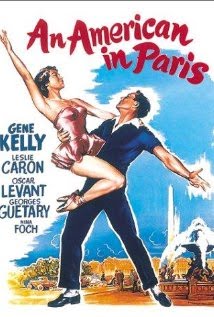
Review – An American in Paris


June 16, 2011

An American in Paris – U.S., 1951

Every week someone tallies the amount of actual in-ring action on the WWE’s weekly shows, RAW and Smackdown. The amount of time usually clocks in at about twenty-five minutes, the rest of time having been spent on backstage banter designed to advance the multiple storylines of the wrestling universe. And every week there are the complaints that there simply isn’t enough wrestling in professional wrestling. I mention this in a review of Vincente Minnelli’s 1951 Best Picture winner, An American in Paris, because if I ever watch the film again, I’m going to time just how much of the film’s running time is actually devoted to moving the story forward. I’m not completely convinced it would beat Smackdown’s time.

This is not always a terrible thing. The musical numbers in Stanley Dohen’s Singin’ in the Rain, in particular “Make ‘em Laugh,” could hardly be said to advance the plot much. In fact, a few of the numbers simply tell us in song what the characters just said in words. However, Singin’ in the Rain has something that An American in Paris lacks – history. It is not simply a love story; it’s a love story set during one of the most challenging and important periods for both America and the motion picture industry. What goes on in An American in Paris is rather trivial compared to that.

An American in Paris begins with a clunky narrative device that is wisely abandoned quickly. Through it, three of the central characters in the film talk to the audience in a way that would suggest that they are somewhere in the theater watching the film. Each one introduces himself, tells us why he is in Paris, and when the camera focuses on someone that is not them, lets us know. One informs us that the person on screen couldn’t possibly be him because he’s “too happy.” The first man is Jerry Mulligan (Gene Kelly), a struggling artist who hopes to one day make it big as a painter. Another man is Henry Baurel (Georges Guetary), a local singer who is something of a celebrity in Paris. Their mutual friend is Adam Cook (Oscar Levant), a moody piano player who like most in his profession dreams of composing a piece of music so great that it would bring the audience to its feet.

One day Mulligan meets a wealthy woman named Milo Roberts (Nina Foch), who takes an interest in two of his paintings, as well as in the man who paints them. Later, we hear that she’s done this sort of thing before and that the results have not been very favorable. The two eventually enter into a business relationship of sorts – she’ll help him become famous and he’ll… well, he’ll pay her back. The dialogue between them is smart and surprisingly bold for 1951. During one exchange, Mulligan asks what is holding up the dress she is barely wearing. Her response: “Modesty.” In another decade, the film might have expanded on their relationship and allowed them to grow closer, but alas the film is a product of its time, and a sexually free, financially-independent woman apparently was not someone a free-spirited, strongly independent-minded man would be drawn to except out of necessity. And so the film has Mulligan, who looks to be in his thirties, fall for a much younger and much more innocent girl, Lise Bouvier (Leslie Caron), who is just nineteen. The problem is that Bouvier is already engaged – to Baurel.

If all of this sounds pretty standard, that’s because it is. We know exactly where the film is going and how it will end precisely because it is such a conventional story. In fact, the film’s storyline of a man being financially supported by a woman wasn’t original even when the film was released. Sunset Boulevard beat it by one year.

This is not to say that there isn’t a sweetness to An American in Paris, for there is. Mulligan and Bouvier certainly have chemistry, and their dance numbers are choreographed in such a way that viewers may feel that they truly are meant to be together. I also liked the way Mulligan’s competition for Bouvier is not a bad guy, as the other men are sometimes made out to be. In fact, a very powerful movie could have been made about Bouvier and Baurel’s back story. At the very least, it deserved a flashback or two. Instead, we get a scene in which Baurel tries his best to describe Bouvier to Cook. With each description, viewers see her dancing a different kind of dance, none of which enable viewers to understand her as a person. I suppose this is meant to be Cook’s imagination, which only goes to show that in movies at least, artists dream in extravagant dance numbers.

Just before the film ends, there is a rather long musical number that occurs entirely in Mulligan’s head, which ultimately means that it doesn’t advance the plot. Here too a comparison with Singin’ in the Rain can be made, for that film included “Gotta Dance,” which may be the longest set-up for an inside joke ever put on celluloid. The difference is that the dance number that closes An American in Paris seems to not have much of a purpose – story-wise, that is - for the film ends within minutes of Mulligan returning from his inner stage to the real world.

Again, there’s nothing necessarily wrong with this in theory. However, when a musical doesn’t have much of a story to tell, which this one doesn’t, its musical numbers can sometimes seem as if they are intended solely to disguise the fact that the story is razor thin and to ensure that the film has the proper running time. I’m not entirely complaining about this, for it’s difficult to be bored when Gene Kelly is on screen impressing viewers with his bionic feet. The problem is that what we see when the music stops just isn’t as interesting or fresh as it should be – especially for a Best Picture award-winner. To me, An American in Paris is fun, yet forgettable. It’s also an example of the Academy simply getting it wrong. It happens. (on DVD and Blu-ray)

3 stars

Monday, June 28, 2010

Capsule Review - The Deer Hunter


The Deer Hunter - U.S., 1979

I have a feeling that for many people The Deer Hunter is memorable because of one particular scene. There’s nothing necessarily wrong with this, for sometimes one scene is all a film needs to get an actor or actress an Oscar nomination or to resonate for a long time with moviegoers. And the scene in The Deer Hunter that probably sticks with viewers the most is indeed incredibly powerful. In it, North Vietnamese soldiers force South Vietnamese and American soldiers to play Russian roulette. When soldiers hesitate or shake with fear, the North Vietnamese commander slaps them and threatens them with certain death if they don’t pull the trigger. We see both fear in the eyes of some of the good soldiers and malicious disregard on the faces of the North Vietnamese soldiers. It’s not hard to see why this scene would be often cited and discussed whenever the film comes up in conversation. The problem is that the writers of The Deer Hunter apparently thought the scene worked so well that they included three other variations of the scene in the film, one of which comes dangerously close to giving the impression that all of Vietnam is filled with adult males who care more about money than human life. To be fair, the first scene is incredibly emotional, for it clearly establishes the nightmare that these soldiers experience in the jungles of Vietnam. However, I have mixed feeling about the three other scenes in which variations or elements of Russian roulette appear. Perhaps the writers of the film went to the well once too often.

The Deer Hunter is about a group of friends and how their lives are changed forever when three of them leave to fight in Vietnam. The first half of the film establishes the depth of their friendship, while the second half shows viewers what three of them experience in Vietnam and how it affects them and the people close to them. The dialogue is a little corny at times, but for the most part, the cast makes it sound more authentic than it probably really is. One of my problems with the film is that there seem to be few consequences in the second half of the film, despite some of the character’s extremely problematic behavior. For example, one character puts a gun to his friend’s head and pulls the trigger (one of the instances of a variety of Russian roulette), yet there’s no hint of a strained relationship later on. Another character seems to have completely shut down mentally, yet apparently all it takes is for her husband to return home for her to be good as new. In addition, two characters start to have a relationship that they both know is not exactly proper, especially considering the entire town knows that one of them is engaged to the other’s best friend. However, their relationships is greeted with either complete indifference or kept so secret that there’s no chance of it creating tension. Where’s the drama in that? Don’t get me wrong, though. The Deer Hunter is a good film, consisting of interesting characters and thoughtful insights on friendship and the effects of war on ordinary people, but in my opinion, it simply never rises beyond that. (on DVD)

3 stars

Friday, January 15, 2010

Review – Marty


January 16, 2010

Marty – U.S., 1955

If we are not like Marty Piletti (Ernest Borgnine) in some way, we most likely know someone who is – someone who is shy, insecure about his looks, unsuccessful in love and relationships, unsure whether to stay in the game or simply accept a life of bachelorhood. At 34, Marty is the subject of conversations he’d rather not be having. In the first scene, he is pestered at his job at a meat market by two consecutive customers because he remains unmarried while his younger brothers and sisters have all tied the knot. And it’s not as if these customers politely inquire about his marital status, get an answer, and drop the conversation. Instead, these two older ladies keep the conversation going, adding their own personal observations concerning the horror and tragedy of such an occurrence as a man in his thirties not being married. It’s just not normal, they seem to be saying.

One woman who shares these two customers’ concerns over Marty’s perpetual single status is his mother, Theresa (Esther Minciotti). She’s so concerned about it in fact that she takes the unusual step of asking her nephew Thomas (Jerry Paris) where Marty can meet a nice girl. Thomas suggests a local dance hall called the Stardust Ballroom because, as Thomas puts it, “It’s loaded with tomatoes.” It’s a line his mother will later repeat verbatim to a somewhat surprised Marty. Mothers simply aren’t supposed to talk like that. Marty eventually goes to this magical place supposedly replete with beautiful single women just itching to meet the man of their dreams and settle down. His good friend Angie (Joe Mantell) finds a dance partner rather easily after using the somewhat crude sounding line, “What do you say? Wanna dance?” as an introduction. Marty is not so lucky, for the woman he asks dismisses his efforts with a rather cold, “I don’t feel like dancing yet.”

The Stardust Ballroom itself is extremely interesting to dissect. There, surrounding a large dance floor, men stand on one side staring critically at the women standing across the room from them. Apart from sizing up the women, assessing their appearance and body shape, they appear to be calculating the odds of the women they see being fun and adventurous. Apparently, the majority of men who frequent the Stardust Ballroom are not looking for Mrs. Right; they’re looking for Mrs. Right Now. And many of the women there know this and are perfectly fine with it. It’s 1955 after all, and many of the social taboos that existed for previous generations of women have fallen. Women work, smoke, and get drunk. In addition, many of them go out with men they have just met and wouldn’t mind never meeting again. Watching the film, I got the sense that some of them think they are entitled to all of the things that men are willing to do for them. If they want to take them to a movie or buy them gifts, that’s fine. If they want to go back to someone’s apartment and get drunk, that’s fine as well. What matters most is having a good time, even if that instance of transitory happiness ultimately leads nowhere. As least it was fun while it lasted.

At the Stardust Ballroom, Marty eventually meets a young school teacher named Clara Snyder (Betsy Blair). Their meeting is the result of some rather unchivalrous behavior by Clara’s date and some rather extraordinarily gallant behavior on Marty’s part. Soon they find themselves talking the night away about things they have likely not even told their closest friends. They discover, as all kindred spirits do in films such as these, that they have much in common and that they understand each other in a very deep way. As their feelings begin to grow, they naturally have some awkward moments. Nervousness sets in, things go a little too fast at times, and they find themselves somewhere that perhaps it isn’t proper that they be – after all, they only just met a few hours ago. Each of these moments is dealt with in a realistic way, and none of their conversations feels forced. Rather, they seem like natural topics for two people just getting to know each other.

Writer Paddy Chavefsky could have limited Marty to simply being about two sympathetic characters that meet and begin to like each other, like the later film Before Sunrise. I have no doubt that such a film would also have worked very well. To his credit, Chavefsky elected to make Marty about much more. Chavefsky’s scripts hints as such things as post-traumatic stress disorder, post-war disillusionment, and the way friendships can occasionally become repressive and inhibiting. It also broaches the subject of loneliness in later life, many older people’s sense that society no longer has a use for them, and the bitter desolation that they feel as a result of this. One of the most heartbreaking scenes in the film involves a conversation between Theresa and her sister Catherine (Augusta Ciolli). In it, Catherine bemoans the growing uselessness she feels. Her son has grown up, her husband has died, and she and her daughter-in-law Virginia (Karen Steele) have reached a critical point in their relationship, the later having recently grown so angry at Catherine that she threw a bottle of milk against a kitchen wall in a fit of frustration. Now Thomas and Virginia have asked Theresa if Catherine can live with her and Marty. “These are terrible years,” Catherine tells Theresa. She has a point, and Catherine’s morose assessment of her own life begins to have an effect of Theresa. Perhaps, she begins to think, it would be better if Marty didn’t marry. It’s not an opinion that she has abandoned by the end of the film.

Marty, directed by Delbert Mann, remains a great film. However, it is not a film with a conclusive ending. By the end of the film, Marty and Theresa still have a lot of things that they need to talk about, Thomas and Virginia’s marriage has entered a tough stage, and Marty’s long-time friendship with Angie has changed, perhaps permanently. Nevertheless, these loose ends seem entirely appropriate. What is most important is that change, both positive and negative, has taken place. Marty is a stronger person because of the events that have transpired, and there is hope for both he and Clara. The rest of their story, at that of the characters that surround them, can be left to our overly optimistic imaginations. (on DVD)

4 stars

*Marty won the Oscar for Best Picture of the Year in 1955. Ernest Borgnine took home the statue for Best Actor, and Delbert Mann won Best Director.